
Paschal Not Pagan: Understanding Easter

It’s Holy Week, so you know what time it is…
Cue the annual flood of social media posts claiming that Easter is actually a pagan holiday named after an ancient fertility goddess. You’ve probably seen skeptics (most atheists) suggesting Christians just baptized a pagan spring festival and slapped Jesus’ name on it.
It sounds sensational. But it’s not even remotely true.
Let’s be clear from the start: Easter is not a pagan holiday. It is deeply rooted in the biblical celebration of Passover and the historical resurrection of Jesus Christ.
For my brothers and sisters who grew up in the Churches of Christ, you may have heard a lot of uneasiness about observing religious holidays, especially Easter and Christmas. In many circles, there’s a strong-yet-selective discomfort with anything that feels like a “tradition,” often out of a noble desire to remain faithful to Scripture. We tend to be an ahistorical people, cut off from the rich story of God’s work through time, which can lead to some unnecessary legalism.
Romans 14 speaks directly to this. Paul writes, “Some judge one day to be better than another, while others judge all days to be alike. Let all be fully convinced in their own minds… Those who observe the day, observe it in honor of the Lord” (Rom 14:5–6, NRSV). In other words, if you celebrate the resurrection with joy and reverence to the Lord, you’re not doing anything wrong. You’re doing something beautiful.
So, let’s unpack why Easter is worth celebrating and why the “pagan origin” myth simply doesn’t hold up.
The Biblical Narrative
To understand Easter, you have to understand the Passover.
The story of Passover in Exodus 12 isn’t just a historical event—it’s a theological template. God redeemed Israel through the blood of a lamb, sparing them from judgment and bringing them out of slavery. That narrative becomes the backdrop for the entire New Testament.
The timing of the Passover was also very particular and very significant. In Exodus 12, God gave Israel detailed instructions for the first Passover. A lamb “without blemish” (Exod 12:5) was to be selected on the tenth day of the month and sacrificed “at twilight” (literally “between the evenings”) on the fourteenth day. Its blood marked the homes of Israel so that God’s judgment would pass over them (Exod 12:6–13).
This trend continued into the first century CE. According to Josephus and other Jewish sources, the daily tamid (regular) sacrifices in the Temple were offered morning and evening at around 9 a.m. and 3 p.m.1
On Passover (14th of Nisan), in addition to the daily offerings, the lambs for the household Passover meal were brought to the Temple and slaughtered between 3 p.m. and 5 p.m.2
So when the Gospel writers go out of their way to explain the narrative of Jesus’ death, its alignment with the Passover celebration, and even its timing, we shouldn’t overlook its significance.
Mark 15:25 says, “It was nine o’clock in the morning when they crucified him.” Later, in Mark 15:33, we read that darkness covered the land from noon to 3 p.m. Finally, Mark 15:34–37 tells us that Jesus “gave a loud cry and breathed his last” at the ninth hour—which is 3 p.m.
So, at the exact hour when thousands of lambs were being slain in the Temple for the Passover meal, Jesus—the true Lamb of God—died on the cross.
John’s Gospel confirms this theological alignment. He notes that Jesus was handed over to be crucified around “about noon” on the Day of Preparation (John 19:14)—the time when Passover lambs began to be slaughtered. This supports the view that John is deliberately emphasizing Jesus as the Passover Lamb, sacrificed at the hour when the lambs were being killed.
The Gospel writers are not being poetic—they’re being precise theologians. They show that Jesus died exactly when the Passover lambs died and that He fulfilled even the minute ceremonial details.
But the connection doesn’t stop at His death.
According to Leviticus 23:9–14, the Feast of Firstfruits was celebrated on Sunday, the day after the Sabbath following Passover. On this day, Israel offered the first sheaf of the barley harvest to the Lord, symbolizing the beginning of new life and the anticipation of the full harvest to come.
Jesus rose on the Feast of Firstfruits (Matt 28:1), and Paul interprets this theologically:
“But in fact Christ has been raised from the dead, the first fruits of those who have died” (1 Cor 15:20, NRSV).
His resurrection was not just the defeat of death but the beginning of a harvest. Just as the first fruits guaranteed the full harvest to come, so Christ’s resurrection is our promise.
So, to sum it up:
Crucified at 9 a.m. (morning offering): Jesus begins His sacrificial death.
Darkness covers the land from noon to 3 p.m.: cosmic judgment imagery (Amos 8:9).
Dies at 3 p.m. (afternoon offering/time of Passover lambs): Jesus fulfills the sacrifice.
Rises on Firstfruits Sunday: Jesus becomes the firstborn from the dead, the beginning of a new creation.
So when Christians celebrate Easter, we’re not mimicking pagan spring rites—we’re keeping the truest form of Passover, the one it always pointed toward.
The Witness of the Early Church
The earliest Christian writers clearly understood this. Long before anything like medieval “Easter customs” emerged, the Church was preaching Jesus’ resurrection as the fulfillment of Passover.
One of the most powerful witnesses is Melito of Sardis, a bishop who wrote around AD 170 and delivered a sermon titled On Pascha.
Melito proclaims:
“He is the Passover of our salvation.
He was taken from the flock
and dragged to slaughter,
and at evening he was sacrificed.”
This echoes Exodus 12:6—“the whole assembly of the congregation of Israel shall slaughter it at twilight.” Melito intentionally shows Jesus as the lamb offered at the prescribed hour, perfectly fulfilling the Torah’s demands.
Then he continues:
“This is the one who was murdered.
And where was he murdered?
In the very center of Jerusalem.
When? It was on the day of Preparation,
at the time of the Passover,
in the reign of Tiberius Caesar,
by the unjust hands of Pontius Pilate, the judge of that time…”
And finally, as the climax of the pattern:
“He rose from the dead and mounted up to the heights of heaven.”
Melito’s words show that Christians didn’t “later spiritualize” this connection. These early believers didn’t invent this connection centuries later. They saw it clearly from the beginning: Jesus is the true Passover Lamb, and His death and resurrection unfold perfectly with God’s redemptive calendar.
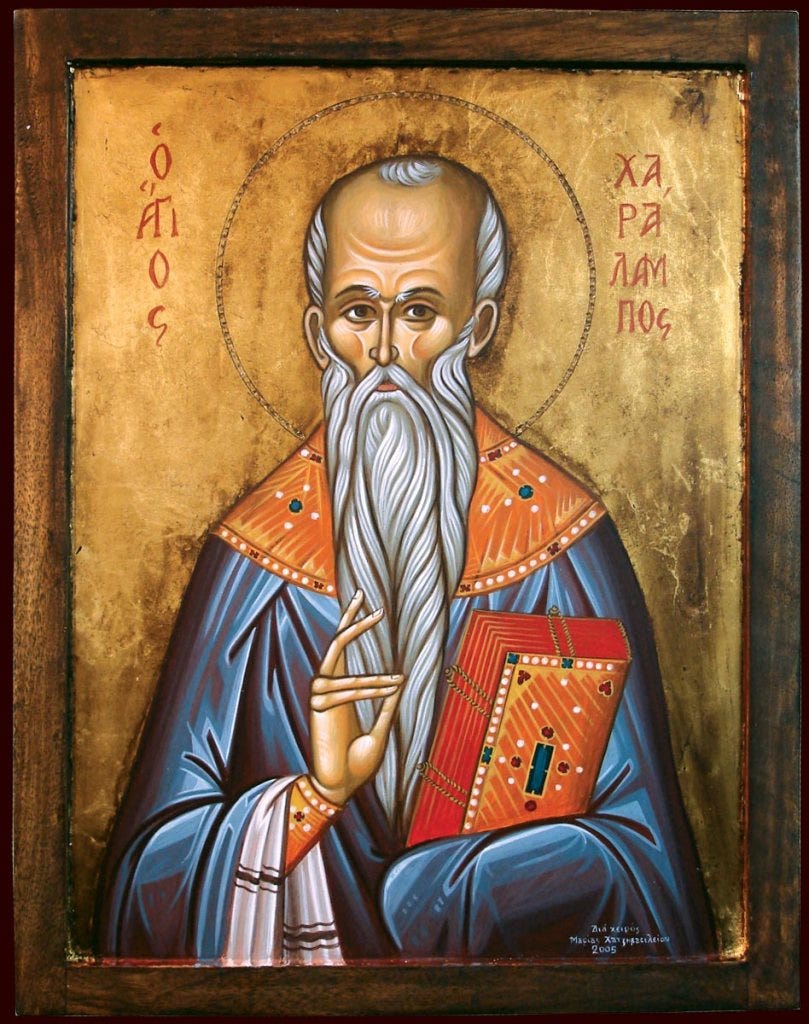
Melito’s words show that Christians didn’t “later spiritualize” this connection. These early believers didn’t invent this connection centuries later. They saw it clearly from the beginning: Jesus is the true Passover Lamb, and His death and resurrection unfold perfectly with God’s redemptive calendar.3
Another early Christian document, the Didascalia Apostolorum (early 3rd century), also emphasizes that Christians are to celebrate the resurrection in connection with the Paschal mystery:
“You shall therefore fast in those days, beginning from the tenth of the month and continuing until the fifteenth day of the month; and thus you shall celebrate the Passover.”4
They weren’t inventing something new or baptizing pagan fertility celebrations. They recognized what God had done in Jesus and ground their practice in the Scriptures, which shaped Jesus’ own ministry.
Cultural Customs ≠ Pagan Worship
One of the most common accusations is that Easter is pagan simply because the English word Easter is thought to come from a pre-Christian spring goddess named Eostre. This idea traces back to the 8th-century English monk Bede, who wrote:
“Eosturmonath, which is now called ‘April,’ was formerly named after a goddess of theirs called Eostre, in whose honor feasts were celebrated in that month. Now they designate that Paschal season by her name, calling the joys of the new rite by the time-honored name of the old observance.”5
Even here, Bede doesn’t accuse Christians of worshiping Eostre or incorporating her rituals—he merely notes that the name lingered linguistically even after the people had become Christians.
Importantly, no archaeological or literary evidence exists that any widespread cult of Eostre existed. Most scholars consider the goddess to be obscure or possibly mythical.6
So then, where does the word “Easter” come from?
Here’s the thing: the word “Easter” is only used in English and a few other Germanic languages. In virtually every other language, the word for the resurrection celebration is derived from the Greek word Pascha, which comes directly from the Hebrew word Pesach, meaning Passover.
So, for example:
Greek: Pascha
Latin: Pascha
Spanish: Pascua
Italian: Pasqua
French: Pâques
Globally, Christians aren’t using “Easter”—they’re using a word that explicitly ties Jesus’s resurrection to the biblical Feast of Passover. This makes perfect theological sense. Jesus died and rose during Passover week. He is the Lamb of God (John 1:29), crucified as the Passover lambs were being slain, and resurrected on the Feast of First Fruits as the beginning of the harvest (1 Cor 15:20–23).
Unfortunately, this connection was obscured for many English readers due to a translation error in the King James Version. In Acts 12:4, the Greek word Pascha—used throughout the New Testament to refer to Passover—was mistranslated as “Easter”:
“And when he had apprehended him, he put him in prison… intending after Easter to bring him forth to the people.” (KJV)
But this is a mistake. The word Pascha appears 29 times in the New Testament. In 28 of those cases, the KJV correctly translates it as Passover. Only once—here in Acts 12:4—is it rendered “Easter.”7 No Greek manuscript says “Easter.” No early Church writer does either.8
This mistranslation has contributed to the false perception that the early Church used the word “Easter” or celebrated something distinct from Passover. In reality, they understood Jesus’s death and resurrection to be the fulfillment of God’s redemptive calendar laid out in the Torah.
So, let’s be clear: the word “Easter” is a later linguistic development, not a theological one. It’s not a name rooted in paganism; it’s simply a local word that stuck in the English-speaking world. The global Church still calls the celebration Pascha—and that name tells the true story: Jesus is our Passover Lamb, slain and raised for our deliverance.
Eggs and Bunnies
Another common argument is that symbols like eggs and rabbits prove the pagan roots of Easter. However, this assumes that every cultural tradition with seasonal symbolism must have a pagan origin and be religious in function. That’s simply not how culture—or theology—works.
Eggs, for example, have long symbolized new life in both pagan and non-pagan settings. But the early Church didn’t adopt the egg as a fertility symbol—it was later used by Christians as a metaphor for resurrection. In Eastern Orthodox traditions, red-dyed eggs symbolize Christ’s blood and the sealed tomb.9
Now, let’s talk about the rabbit—often mocked as a supposed pagan symbol of fertility. But the truth is, there is no historical evidence that rabbits were ever used in formal religious rites by early Christians or even by pagans in a way that directly connected to the celebration of the resurrection.
In fact, the association of rabbits with Easter comes much later, especially in German folklore, where the “Easter Hare” (Osterhase) was said to lay eggs for children to find. This tradition was brought to America by German immigrants in the 1700s.10 It’s a cultural tradition, not a theological one.
As historian Anthony McRoy explains:
“There is no evidence that Christians ever worshipped Eostre or incorporated her into the celebration of the resurrection. There’s nothing in the New Testament or early Christian writings that suggests a connection to pagan deities or fertility rites.”11
This leads us to the more important point: just because Christians may have shared seasonal timing or general imagery with surrounding cultures doesn’t mean they adopted pagan worship. In fact, early Christian writers explicitly rejected that idea.
In the early 3rd century, Tertullian wrote:
“Though we share with the nations [pagans] some of their customs—like dress, food, and common festivals—we do not share their religious rites. The rejection is complete.”12
Tertullian is acknowledging a key distinction: external cultural overlap does not mean theological compromise.
So, no, you’re not worshiping a pagan deity by decorating eggs, and you can host an egg hunt after Sunday service without bowing to Baal.
Why Does the Date of Easter Change Every Year?
One last question people often ask—sometimes suspiciously—is: “If Easter is really about Jesus and not some ancient spring festival, why does the date change every year? Shouldn’t it be on the same day like Christmas?”
It’s a fair question. But the answer is actually built on much of what we’ve thought about so far: Easter changes dates because it’s tied to the biblical calendar—specifically, the timing of Passover.
Here’s how it works:
Easter is celebrated on the first Sunday after the first full moon following the spring equinox.
That’s because the Jewish calendar is lunar, not solar.
The Feast of Passover—when Jesus was crucified—always falls on the 14th day of the Hebrew month of Nisan, which aligns with a full moon.
Early Christians didn’t copy pagan festival dates; they aligned the resurrection celebration with the same biblical calendar that Jesus lived in.
In fact, this issue was a major topic in early church history. In the second century, a controversy arose between Christians in the East who celebrated Pascha on the 14th of Nisan (the date of Jewish Passover, regardless of the day of the week) and those in the West who insisted on keeping the celebration on a Sunday, to reflect the resurrection.
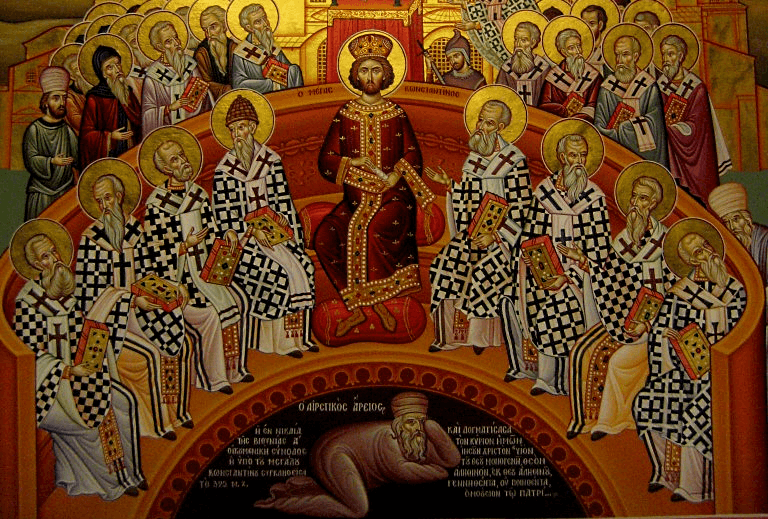
This led to the Council of Nicaea in AD 325, where (among other things) the Church universally agreed that Easter would be celebrated on Sunday, but still in relation to the timing of Passover.13
So far from being arbitrary or pagan, the changing date of Easter is a feature, not a flaw. It reflects the Church’s faithfulness to God’s redemptive calendar, not a departure from it.
Conclusion
So, to sum it up:
Easter isn’t pagan. It celebrates Jesus’ resurrection, firmly rooted in the Jewish Feast of Passover.
The early Church didn’t steal from paganism—they fulfilled prophecy.
Cultural traditions like eggs and rabbits aren’t theological
The word “Easter” is a quirk of English
The changing date of Easter reflects its deep alignment with the biblical story.
Easter is the declaration that:
“…our paschal lamb, Christ, has been sacrificed. Therefore, let us celebrate the festival, not with the old yeast, the yeast of malice and evil, but with the unleavened bread of sincerity and truth.”
(1 Cor 5:7–8, NRSV)
Easter is the bold proclamation of the Gospel: Christ has died. Christ is risen. Christ will come again.
Josephus, Antiquities of the Jews 14.4.3; cf. Mishnah, Tamid 3:2

Mishnah Pesahim 5:3; see also Alfred Edersheim, The Temple: Its Ministry and Services as They Were at the Time of Jesus Christ (Peabody, MA: Hendrickson, 1994), 184–185.

Melito of Sardis, On Pascha, in On Pascha and Fragments, trans. Alistair Stewart-Sykes (Crestwood, NY: St. Vladimir’s Seminary Press, 2001)

Didascalia Apostolorum, in The Apostolic Fathers with Justin Martyr and Irenaeus, ed. Alexander Roberts and James Donaldson (Peabody, MA: Hendrickson, 1994), 620.

Bede, The Reckoning of Time, trans. Faith Wallis (Liverpool: Liverpool University Press, 1999), 54.

Ronald Hutton, Stations of the Sun: A History of the Ritual Year in Britain (Oxford: Oxford University Press, 1996), 180–182.

For a full list of NT uses of Pascha and discussion of Acts 12:4 in the KJV, see Bruce M. Metzger, The Bible in Translation: Ancient and English Versions (Grand Rapids: Baker Academic, 2001), 61–63.

See also Everett Ferguson, Early Christians Speak, 3rd ed. (Abilene, TX: ACU Press, 1999), 122–123.

Nicholas V. Russo, Easter in the Early Church: An Anthology of Jewish and Christian Texts (Notre Dame, IN: University of Notre Dame Press, 2013), 97–101.

Leigh Eric Schmidt, Consumer Rites: The Buying and Selling of American Holidays (Princeton: Princeton University Press, 1995), 114–115.

Anthony McRoy, “Was Easter Borrowed from a Pagan Holiday?” Christianity Today, March 2004.

Tertullian, Apology, in The Ante-Nicene Fathers, vol. 3, ed. Alexander Roberts and James Donaldson (Peabody, MA: Hendrickson, 1995), 123.

Eusebius, Ecclesiastical History 5.23–25; see also Philip Schaff, History of the Christian Church, vol. 2 (Peabody, MA: Hendrickson, 2002), 208–212.


